



Packaging for Snack Products
Crunchiness, freshness, and intense flavor preserved down to the very last bite – packaging that protects your brand and wins over consumers.

Greater protection from light

Greater resistance to fats and oils

Snack Product Packaging
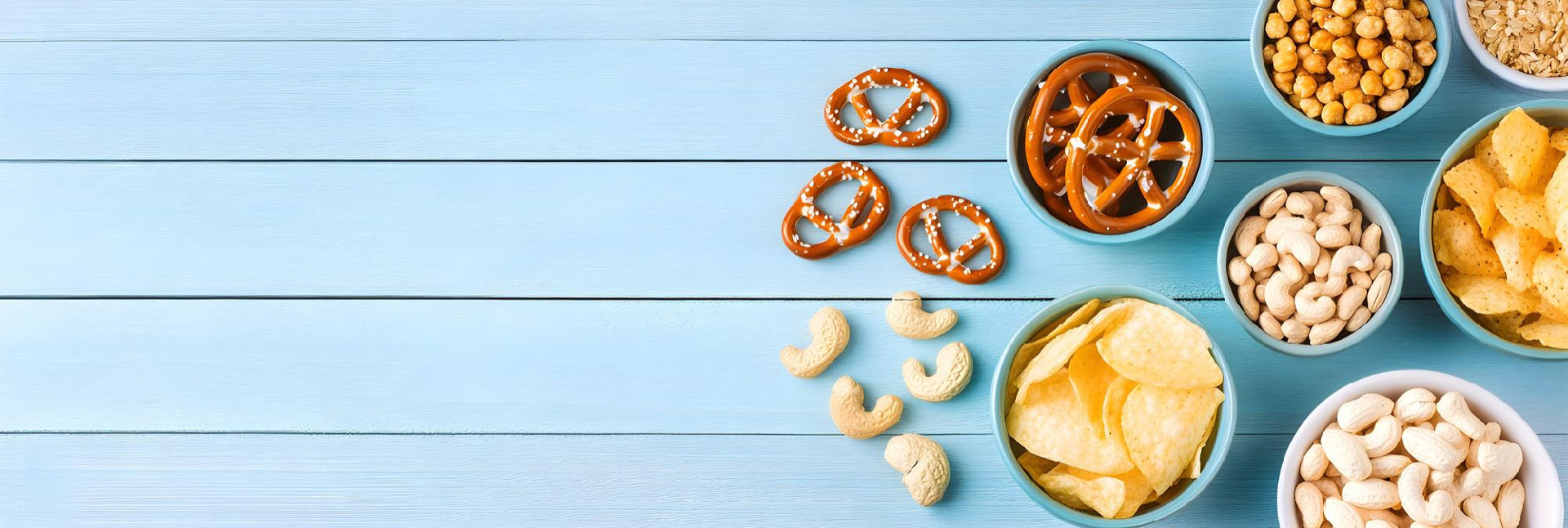
Snack products such as chips, nuts, seeds, and other extruded or roasted snacks occupy a special place among high-consumption foods. Although not staple foods, their composition and mode of consumption require specific technological solutions in packaging to preserve quality from production to end user.
One of the greatest challenges with snack products is maintaining crispness, aroma, and visual appearance throughout the entire shelf life. Brand owners can choose from a wide range of packaging materials that allow for complete adaptability—whether it’s traditional bags, modern zip packaging, or innovative single-serve formats.
High-barrier metallized films and clear materials with advanced barrier layers are the standard for protecting these products. Two key properties stand out as critical for maintaining long-term snack quality: enhanced light protection and greater resistance to fats and oils.
Light protection is essential for preventing flavor degradation, color loss, and rancidity—especially in products with a high oil content. Packaging materials with increased light barrier properties effectively block UV and visible radiation, preventing fat oxidation and prolonging product freshness.
Equally important is resistance to fats and oils. As snacks are rich in oils, preventing oil migration through the packaging stops greasy stains, aroma loss, and texture changes. High fat- and oil-resistant materials keep the packaging clean and attractive while preserving all organoleptic properties of the snacks.
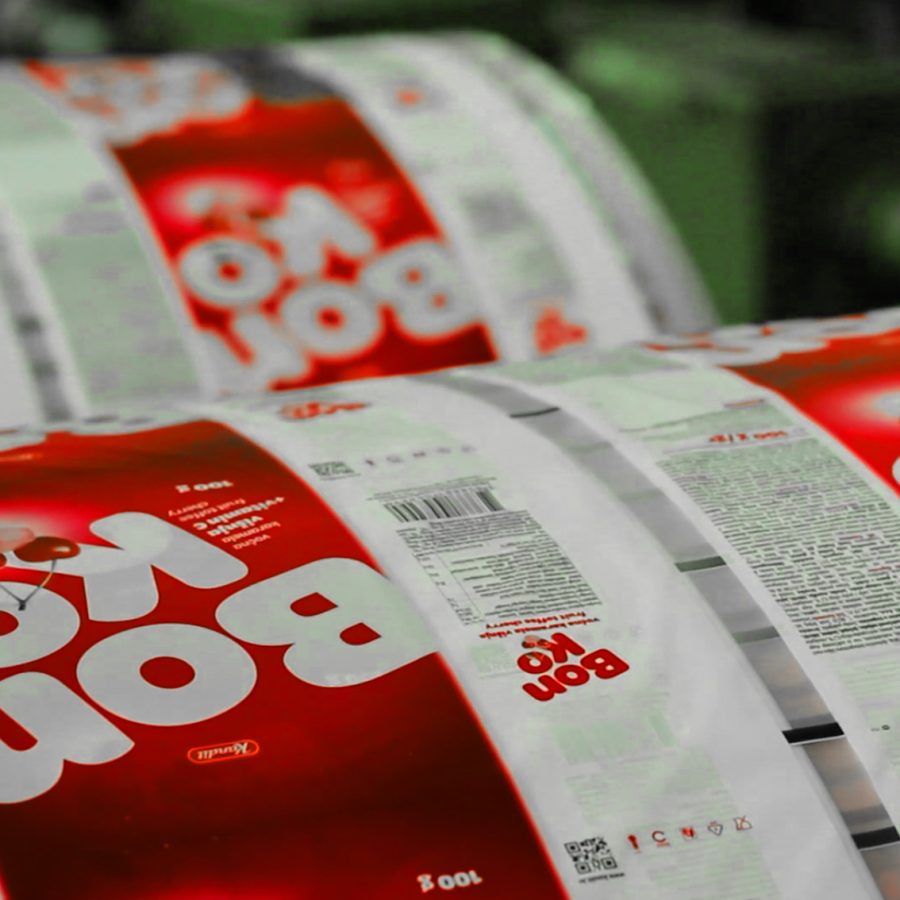
In addition to top-tier barrier performance, modern snack packaging enables high-quality printing, enhancing brand recognition and product appeal. Thanks to innovative solutions, manufacturers can combine aesthetics with protection and shelf life extension—without compromise.
The result is a snack product that reaches the consumer fresh, crispy, and always recognizable—just as it left the production line.
| Symbol | Meaning |
|---|---|
|
Enhanced protection against light |
|
Greater resistance to fats and oils |
| Material | Water Vapor Barrier | Oxygen Barrier | Barrier to Fats and Oils | Light Protection | Aroma & Flavor Retention |
|---|---|---|---|---|---|
| Paper / PE | 🟢🟢🟢 | 🟢 | 🟢🟢 | 🟢 | 🟢 |
| AL / Paper / Wax | 🟢🟢🟢 | 🟢🟢 | 🟢🟢🟢 | 🟢🟢🟢🟢 | 🟢🟢🟢 |
| Paper / AL / Wax | 🟢🟢🟢 | 🟢🟢 | 🟢🟢🟢 | 🟢🟢🟢🟢 | 🟢🟢🟢 |
| Lacquer / Paper / AL / Wax | 🟢🟢🟢🟢 | 🟢🟢🟢 | 🟢🟢🟢 | 🟢🟢🟢🟢 | 🟢🟢🟢 |
| PET / PE | 🟢🟢🟢 | 🟢🟢 | 🟢🟢🟢 | 🟢 | 🟢🟢 |
| PET / AL / PE | 🟢🟢🟢🟢 | 🟢🟢🟢🟢 | 🟢🟢🟢🟢 | 🟢🟢🟢🟢 | 🟢🟢🟢🟢 |
| OPP / OPPmet | 🟢🟢🟢 | 🟢 | 🟢🟢🟢 | 🟢 | 🟢 |
| PET / PET mat / PE | 🟢🟢🟢🟢 | 🟢🟢🟢🟢 | 🟢🟢🟢🟢 | 🟢🟢🟢🟢 | 🟢🟢🟢🟢 |
| 🟢 | Poor | 🟢🟢 | Moderate | 🟢🟢🟢 | Good | 🟢🟢🟢🟢 | Excellent | 🟢🟢🟢🟢🟢 | Outstanding |
Packaging for Snack Products – Specifics, Technological Advantages, and Recommended Structures
Specifics in Snack Production
The production of snack products—such as chips, nuts, seeds, and extruded snacks—involves the use of high-quality raw materials, precisely defined thermal processing, and strictly controlled packaging conditions. These products are rich in fats and oils, often subjected to frying or baking at high temperatures, and then rapidly cooled and packaged to preserve their distinctive crunch and aroma.
The key technological challenge is preventing loss of crispiness, oxidation of oils, rancidity, and loss of specific aromas—none of which are possible without effective barrier packaging. The speed and reliability of the packaging process directly impact product stability and shelf life extension.
Chips and Crisps
Packaging: Requires a high level of protection against light, oxygen, and moisture. The use of metallized foils (e.g., PET/AL/PE, PET/OPP met/PE) is standard, often with an additional layer for easy opening. The barrier to fats and oils is mandatory due to the high oil content, while print quality is important for visual recognition.
Goal: Preserve crispiness, prevent rancidity, loss of flavor, and greasy stains on the packaging.
Nuts and Kernels
Packaging: Maximum barrier to oxygen and moisture is necessary due to the high content of unsaturated fats prone to oxidation. Multilayer structures with aluminum or metallized middle layers are used, often with packaging suitable for vacuum or inert gas filling.
Goal: Prevent rancidity, loss of aroma, and absorption of ambient moisture.
Seeds
Packaging: Focus on high barrier to fats and oils, as well as moisture protection. PE and metallized foils are often the first choice, with the option of zipper closures for reclosability.
Goal: Preserve crunch, prevent greasy spots, and extend shelf life.
Extruded Snacks
Packaging: High protection against moisture and moderate barrier to fats is required. Materials such as OPP/OPP met/PE or PET/PE, with various packaging formats (stick, multipack), enable optimal protection and attractiveness.
Goal: Prevent softening and loss of crunch, preserve aroma, and ensure ease of use.
Hard-Baked Snacks
Packaging: Moisture barrier is key to maintaining crispness. Structures like Paper/AL/PE or PET/PE are commonly used, with lacquered layers added for improved printability and color protection.
Goal: Extend freshness and visual appeal, prevent softening and loss of flavor.
Crackers and Snack Biscuits
Packaging: Focus is on protection from moisture and fats. Transparent or matte materials with PE layers and easy-open/reclose (zipper) features provide convenience and functionality.
Goal: Preserve texture, prevent greasy stains, and ensure attractive presentation.
Crispy Toasted Products
Packaging: Requires a moderate barrier to moisture and fats, along with good mechanical resistance due to the product’s fragility. PET/PE and Paper/PE are common choices, and perforation is often applied to remove excess moisture.
Goal: Preserve structure and flavor, ensure easy handling, and support brand recognition.
Protein and Energy Snack Bars
- Packaging: A high barrier to oxygen, moisture, and fats is mandatory, especially for products containing nuts or chocolate. Multilayer metallized foils and materials that allow for quality printing and labeling are used.
- Goal: Prevent rancidity and drying out, protect nutritional profile, and ensure a long shelf life.
Meat or Fish Snacks (Dried, Smoked, Roasted)
- Packaging: Materials with extremely high barrier to oxygen and moisture, often suitable for vacuum or inert gas packaging. PET/AL/PE and similar structures are standard.
- Goal: Preserve microbiological stability, prevent drying out, and maintain aroma.
Fruit and Vegetable Snacks
- Packaging: Moisture barrier is essential due to the hygroscopic nature of the product, but also light protection to preserve color and taste. Transparent materials with high-quality print and possible “window” effect are often used.
- Goal: Maintain natural colors and flavors, prevent softening or hardening.
Common Technological Features for Snack Packaging
- High barrier to moisture, oxygen, and fats – Essential for preventing loss of crispness, rancidity, and changes in flavor/aroma.
- Compatibility with fast and automated packaging lines – Materials must work with modern equipment, enable quick sealing, and retain barrier properties throughout the process.
- Design flexibility and print quality – Materials should allow for visually attractive presentation and brand communication.
- Packaging functionality – Easy opening, reclosability (zipper), and various formats (single, multipack, stick) to suit consumer habits.
- Stability during storage and distribution – Ensures product preservation regardless of temperature or microclimate changes during logistics.
High-quality, well-chosen packaging is the key ally of any snack brand. Only materials with precisely defined barrier properties can guarantee that chips, nuts, protein bars, and other snacks maintain their crispiness, aroma, and attractive appearance—from production to the consumer.
Modern packaging is not just protection, but also a powerful tool for market differentiation, building consumer loyalty, and safeguarding brand reputation. The right packaging choice directly impacts product shelf life, market success, and customer satisfaction—making it an investment that pays off many times over.