



Multilayer Lamination for Modern Packaging
At Tipoplastika, we laminate flexible materials in multiple layers using both solvent based and solvent free adhesives, as well as extrusion lamination to provide long lasting protection, barrier properties, and packaging functionality tailored to the needs of your product and market.
Lamination
Multilayer Lamination as a Guarantee of Long-Term Protection and Packaging Performance
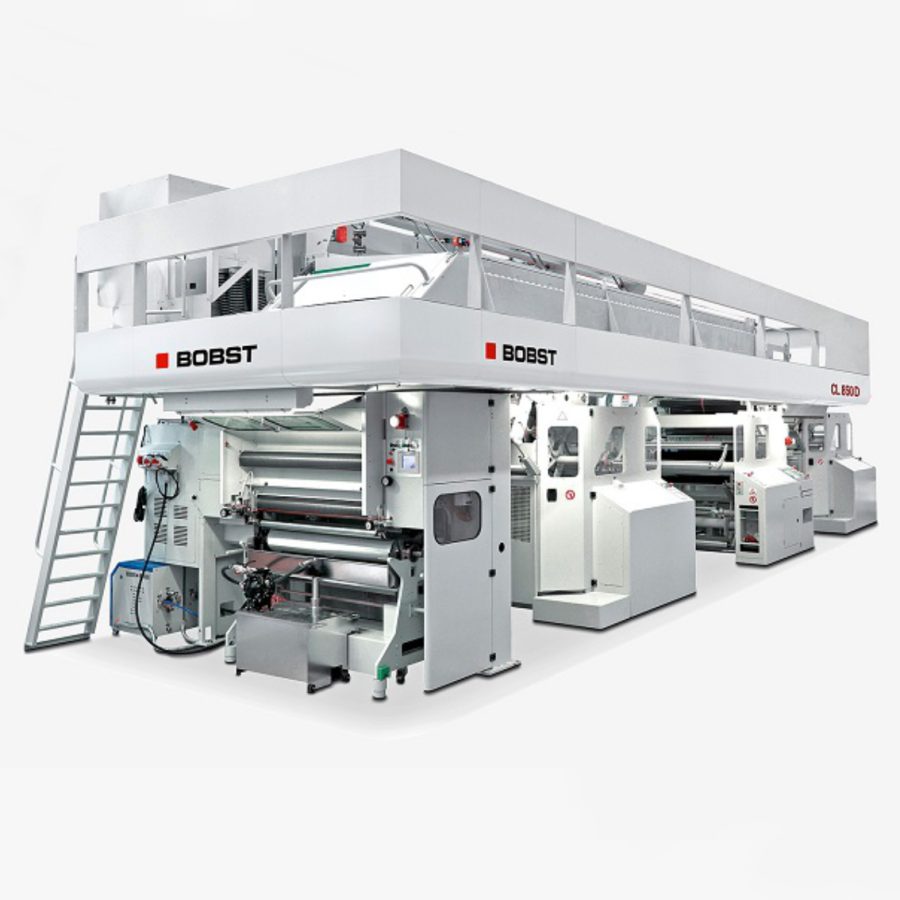
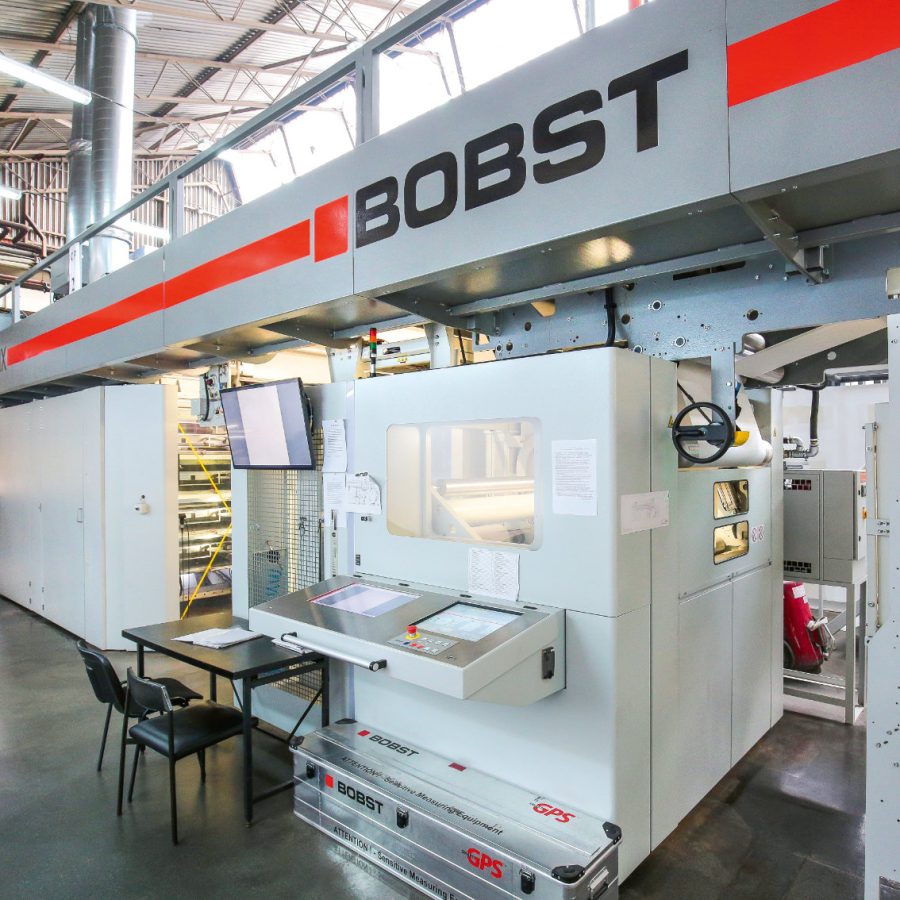
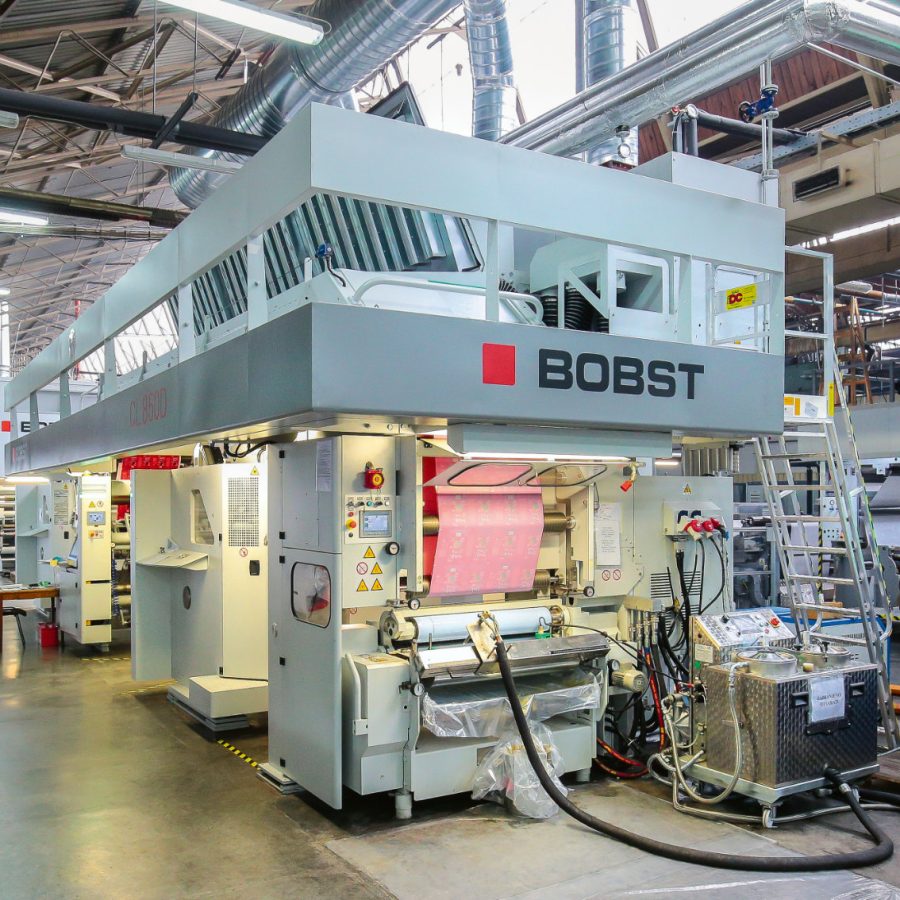
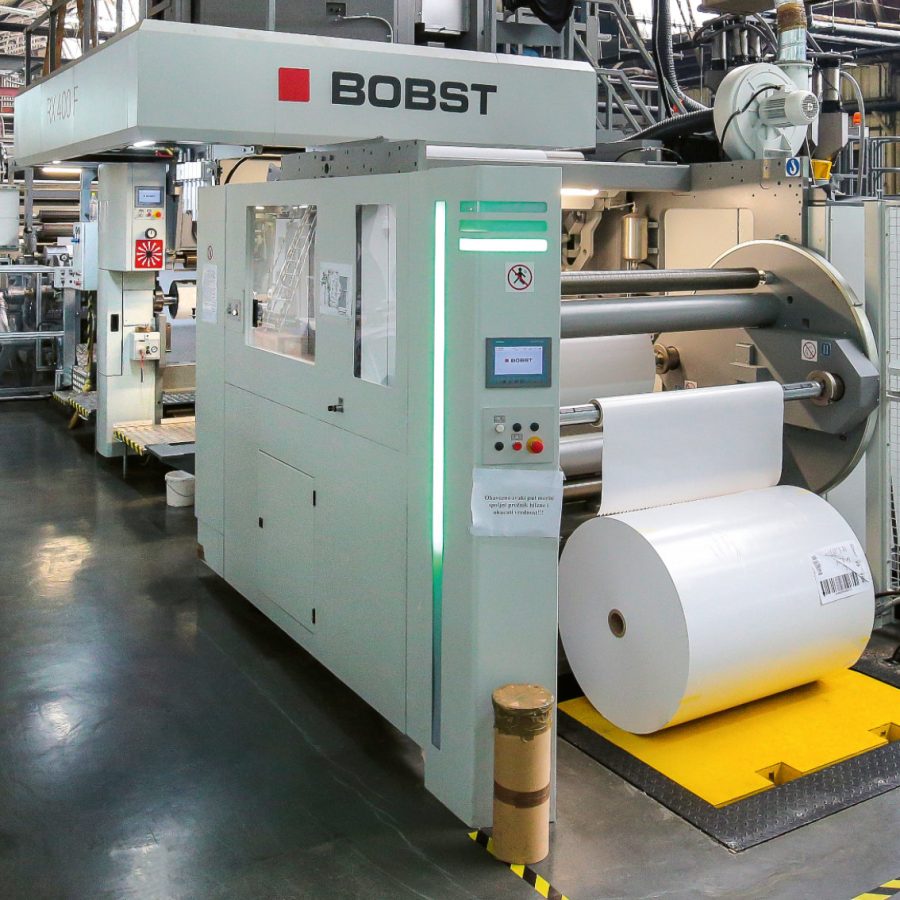
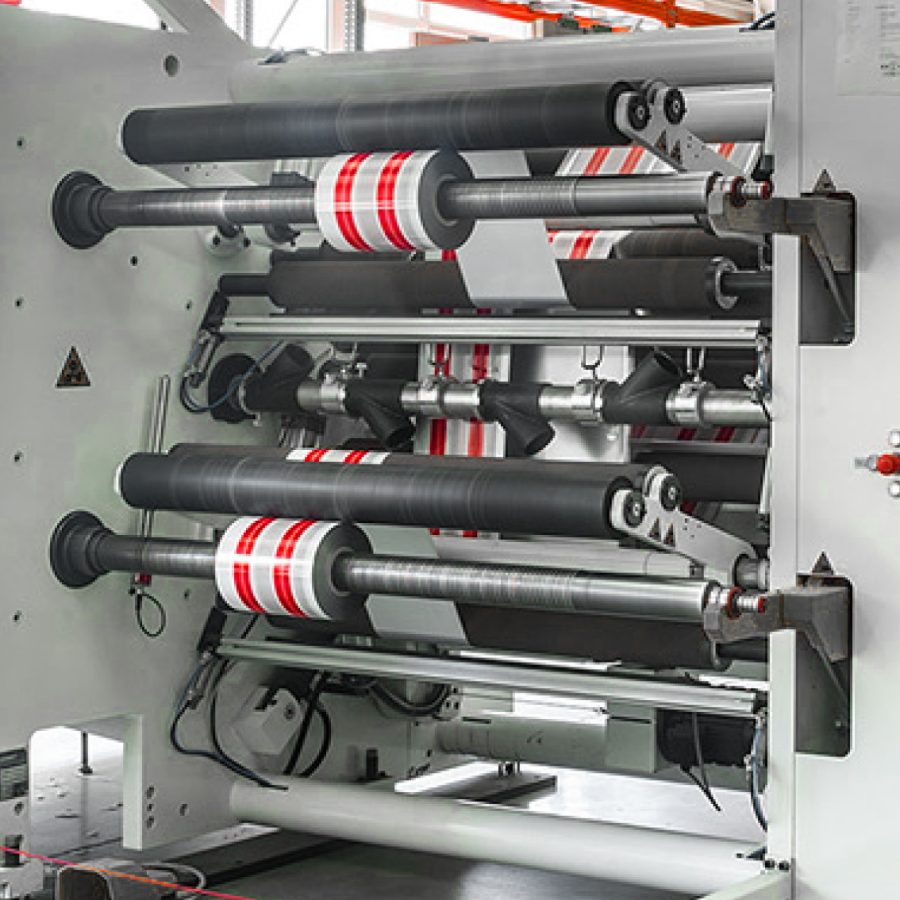
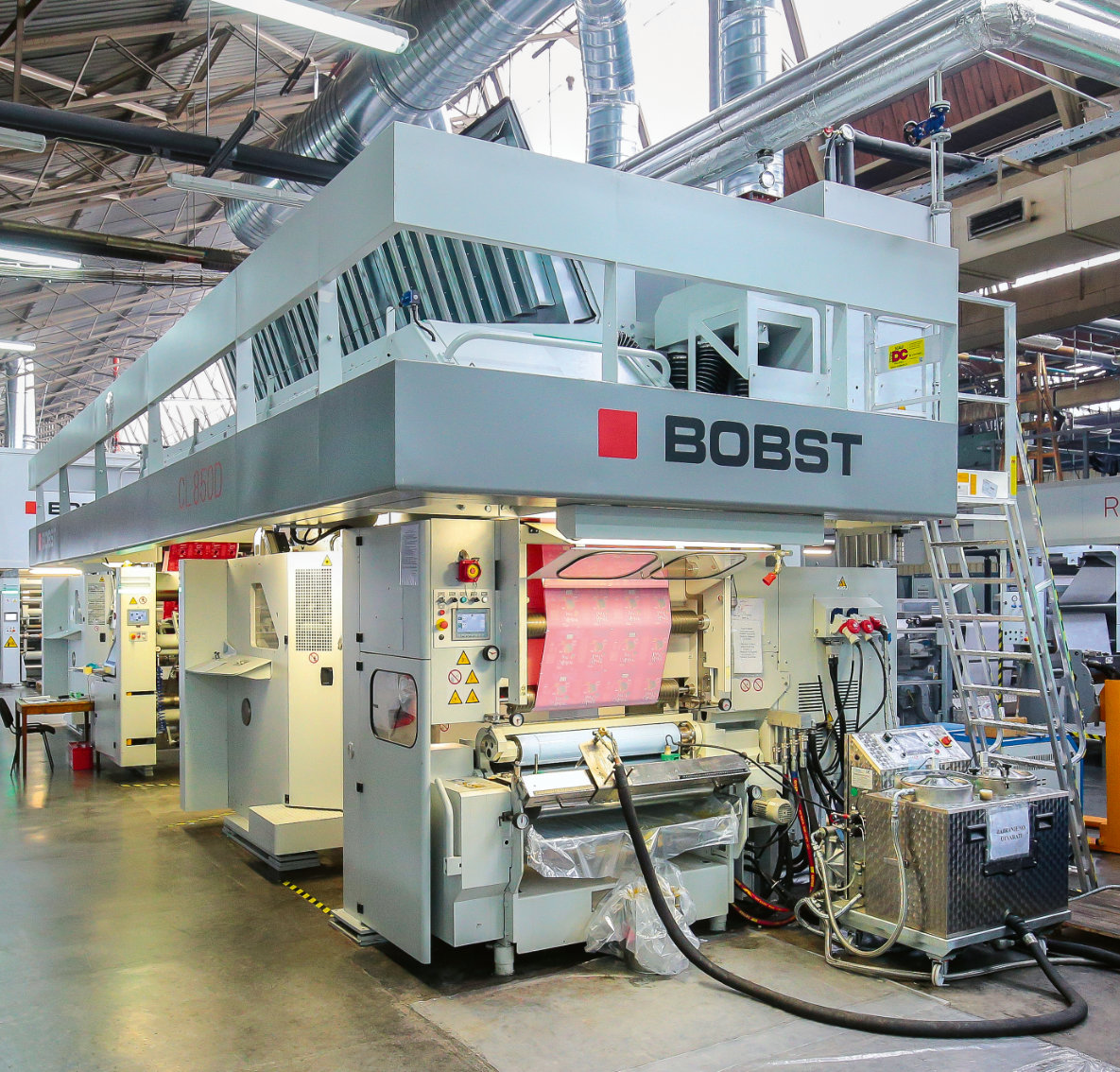
The lamination process at Tipoplastika represents one of the key stages in the production of premium-quality flexible packaging. Thanks to the state-of-the-art Bobst CL 850D machine, lamination is carried out with exceptional precision and control—for both duplex and triplex structures. The purpose of lamination is to bond two or more layers of different materials to create packaging with enhanced barrier, mechanical, and visual properties.
Tipoplastika offers three complementary lamination systems:
- Solvent-based lamination – Designed for applications requiring a strong and durable bond between layers, especially when packaging must withstand demanding transportation and storage conditions.
- Solventless lamination – Ideal for food, pharmaceutical, and child-safe packaging, as it contains no harmful emissions and meets the strictest European regulations on food contact materials.
- Extrusion lamination – By applying a molten layer of polyethylene (PE) or polypropylene (PP) directly onto the substrate, this process creates an additional functional layer that seals the structure, improves sealability, and contributes to sustainability.
Each of these processes achieves a high-quality and stable bond between layers, with precise tension control, uniform adhesive distribution, and complete traceability of all parameters. This approach enables the production of multilayer flexible films that combine barrier efficiency, resistance to fats, moisture, UV radiation, and mechanical damage—fully tailored to the requirements of the end application.
Laminated materials are used for packaging intended for:
- The food industry (coffee, powdered milk, snacks, ready meals)
- The chemical industry (detergents, agrochemicals)
- Pharmaceutical and medical products (materials resistant to sterilization and moisture)
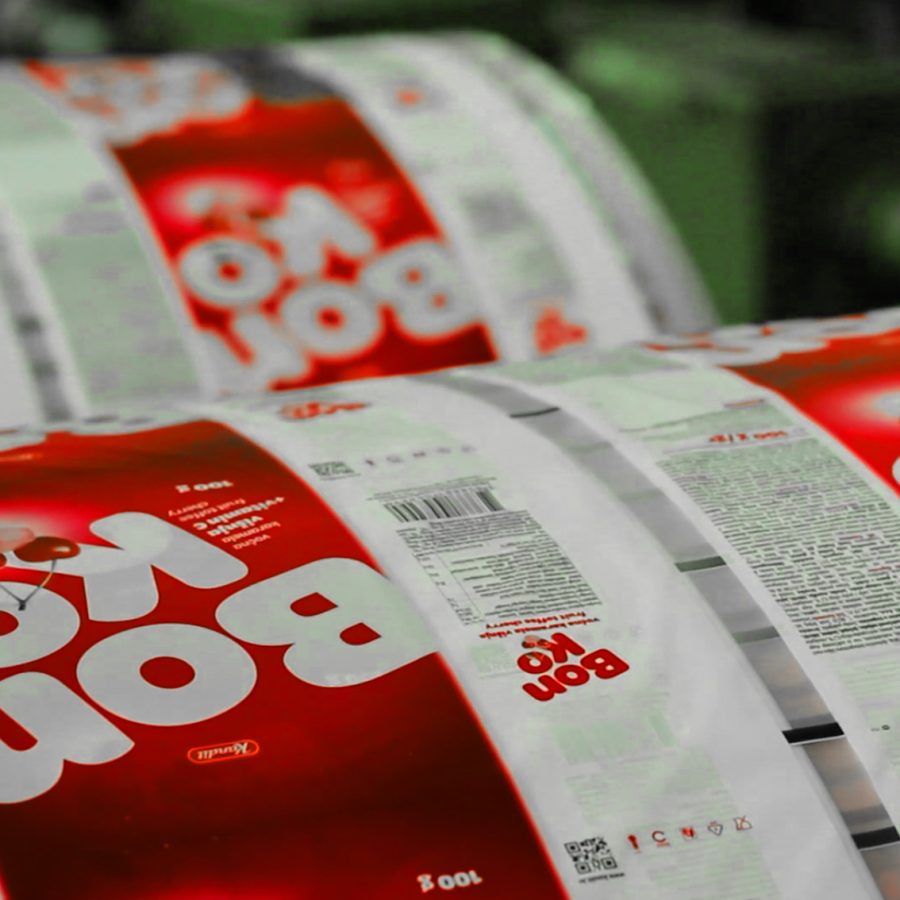
Combined with in-house printing in 8 and 9 colors, as well as the option of cold-seal adhesives and matte lacquers, Tipoplastika offers a complete solution for modern, functional, and visually superior packaging.
Types of Lamination We Use
Depending on product requirements and the standards of the target industry, we utilize three complementary lamination technologies.
Solvent-based Lamination
Used for layers requiring a strong and durable bond—particularly suitable for the chemical industry and goods with extended shelf life. Ensures resistance to grease, moisture, and extreme conditions.
High durabilitySolvent-free Lamination
An environmentally friendly solution with zero VOC emissions. Ideal for packaging in contact with food, pharmaceutical, and children's products. The process is completely solvent-free and clean.
Eco-friendlyExtrusion Lamination
The application of molten PE or PP directly between layers ensures high functionality and stability—especially for products requiring additional sealing or insulation.
FunctionalityBenefits of Multilayer Packaging by Industry
Laminated packaging provides a combination of protection, functionality, and presentation—customized for the specific needs of every industry.
Food Industry
Protection against oxygen, moisture, and UV radiation—extended shelf life, preserved aroma, and product freshness.
Protection & FreshnessConfectionery Products
Effective barrier against fats and odors, with premium visual finishing for retail shelves.
Aesthetics & FunctionalityPharmaceuticals & Medical
Materials resistant to microorganisms, moisture, and sterilization—ensuring safety and traceability of every layer.
Safety & SterilityCosmetics & Hygiene
Resistant to chemicals and leakage, with luxury presentation and the option for matte/gloss effects.
Luxury & ProtectionChemical Industry
High mechanical strength and chemical stability—ideal for detergents, agrochemicals, and industrial packaging.
Stability & ResistancePet Food
Multilayer materials for vacuum and gas packaging—preserving taste, aroma, and nutritional value.
Nutrition & FreshnessLaminated Materials and Environmental Benefits
We tailor packaging structures to the technical and ecological requirements of the modern market.
Laminated Materials
- PET / PE – high chemical and mechanical stability
- PET / AL / PE – excellent barrier properties against moisture, oxygen, and light
- Papir / AL / PE – traditional appearance with a functional layer
- OPP / OPP met / PE – perfect for snacks and fatty products
- PET / OPP met / PE – attractive visual effect and protection
- OPA / PE – for vacuum packaging and cold chain stability
- PE / PE – new generation recyclable monomaterial
- Papir / PE – biodegradable and natural alternatives
Environmental Benefits of Multilayer Lamination
- Possibility of using monomaterials suitable for recycling
- Solvent-free lamination without VOC emissions
- Reduced layer thickness while maintaining protective properties (less waste)
- Replacing conventional aluminum foil with metallized optical films for easier processing
- Optimized structures in accordance with sustainability and declaration requirements
- Possibility of packaging certification according to EU regulations (FSC, PPWR, etc.)
- Extended shelf life → less food waste and reduced CO₂ footprint
Why Is Lamination Quality Critical?
The quality of lamination directly impacts the safety, functionality, and visual appearance of packaging. Poor lamination can lead to product leakage, contamination, reduced shelf life, and brand damage in the eyes of consumers.
Mechanical Stability
Without proper lamination, layers may separate during folding, filling, or transport. Precise bonding guarantees packaging strength and resistance to abrasion and pressure.
Barrier Efficiency
The barrier against oxygen, moisture, and light must remain stable throughout the entire distribution chain. Inadequate lamination can compromise product freshness, leading to spoilage or loss of flavor and aroma.
Aesthetics & Appearance
Uneven lamination causes wrinkling, deformation, and “bubbling” of the packaging. Only top-quality laminated layers ensure flawless printing and luxury product presentation on the shelf.

Tipoplastika provides optimal packaging solutions that combine superior product protection with an exceptional visual identity for your brand.
Our mission is to transform each of your ideas into packaging that not only protects your product, but also clearly communicates your brand values. By combining multilayer structures, advanced adhesives, and state-of-the-art equipment, we ensure functionality, safety, and market recognition.