




Design and prepress
Our design team connects creative ideas with the industrial process. Fast, precise, and professional prepress for gravure and flexo printing.

Design and prepress
Design and graphic prepress for flexo and gravure printing
In the packaging production process, print quality does not begin at the press—it begins in the file. Our role as a partner in design and prepress is to ensure that every visual idea is translated into a technically functional, print-precise, and aesthetically flawless result. Especially when it comes to flexo and gravure (rotogravure) printing, understanding the specifics of these technologies is crucial.
Gravure printing (rotogravure) — for high-volume and extremely precise packaging
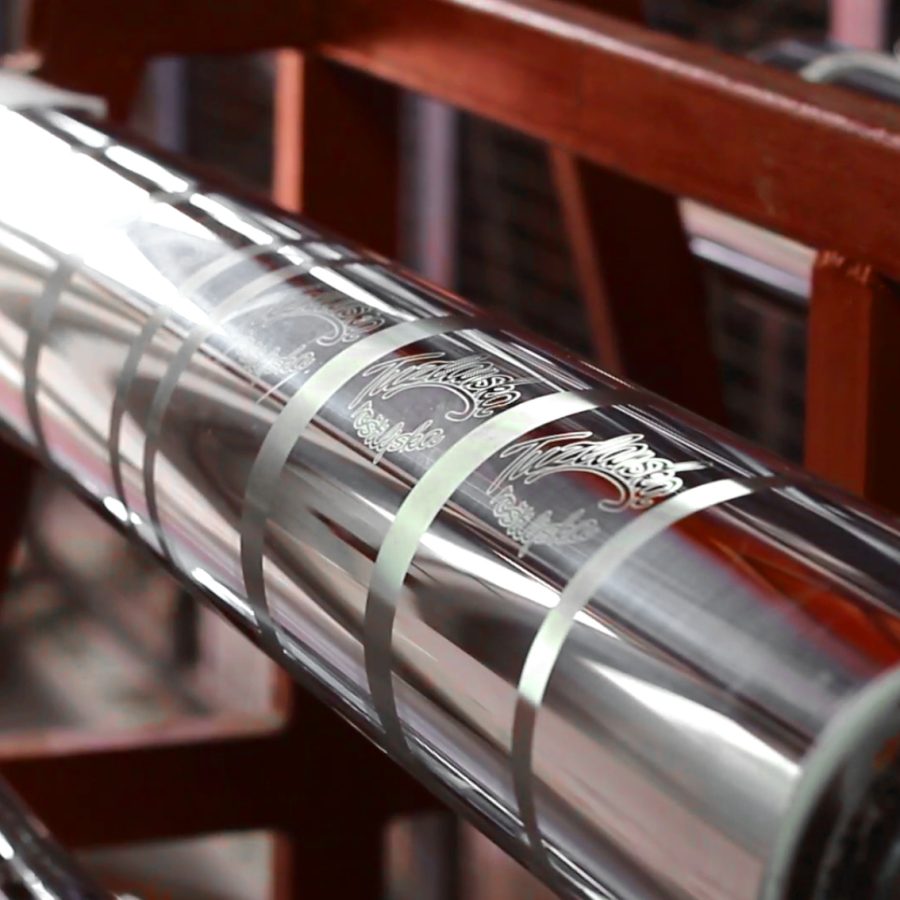
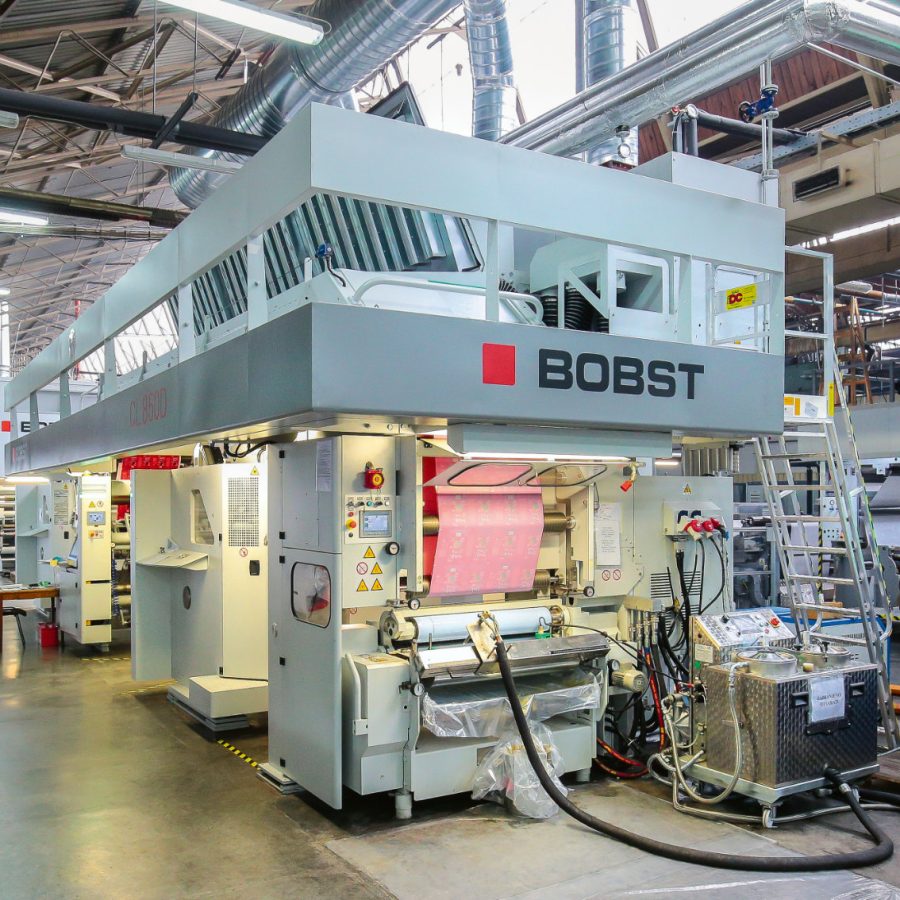
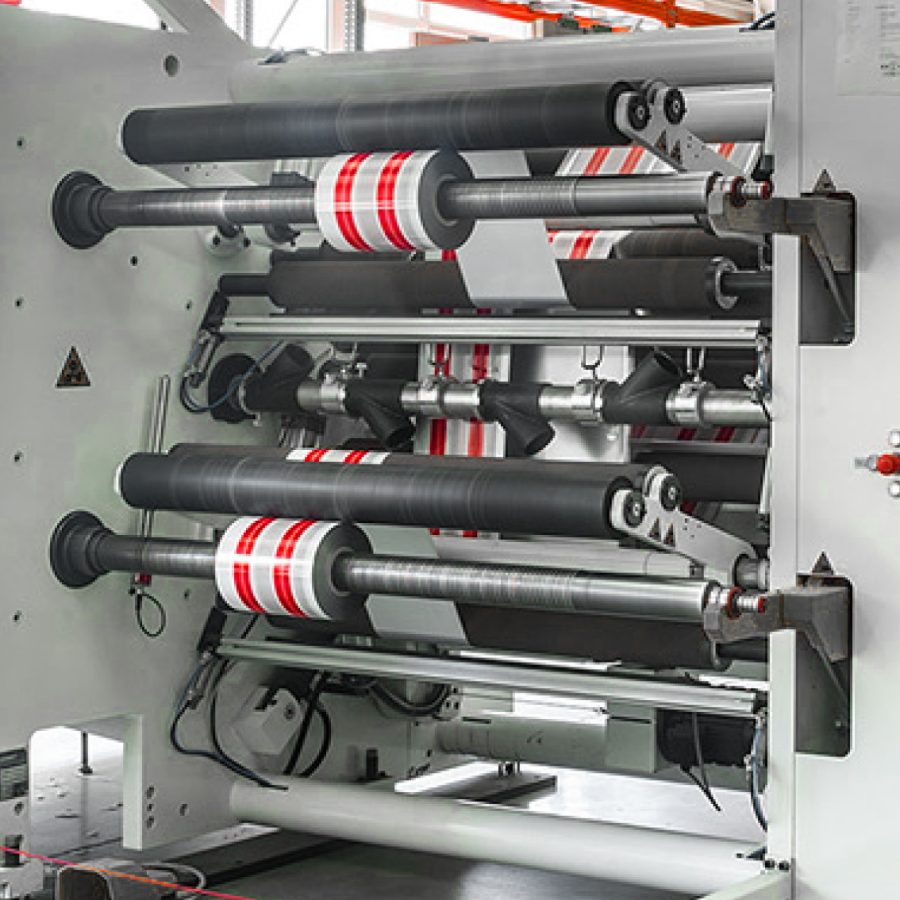
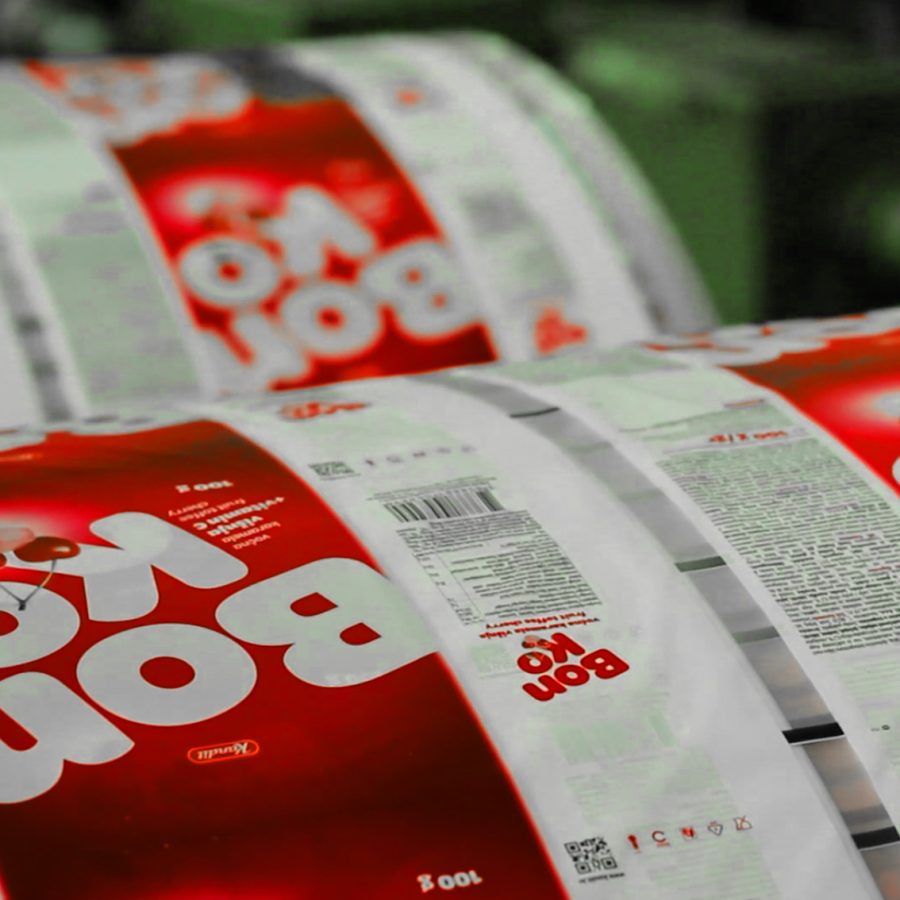
Rotogravure printing, as implemented at Tipoplastika on the BOBST RS6003C HS press, is the industry standard for large runs of premium-quality packaging. The technology itself requires that every design be perfectly adapted for engraving the printing cylinders.
Design and prepress specifics for gravure printing:
- Color rasterization must be carefully controlled, as ink is applied from engraved cells—gradients must be stable, without unwanted transitions.
- Minimum line thickness and font size require special attention—due to the cylinder structure and engraving depth.
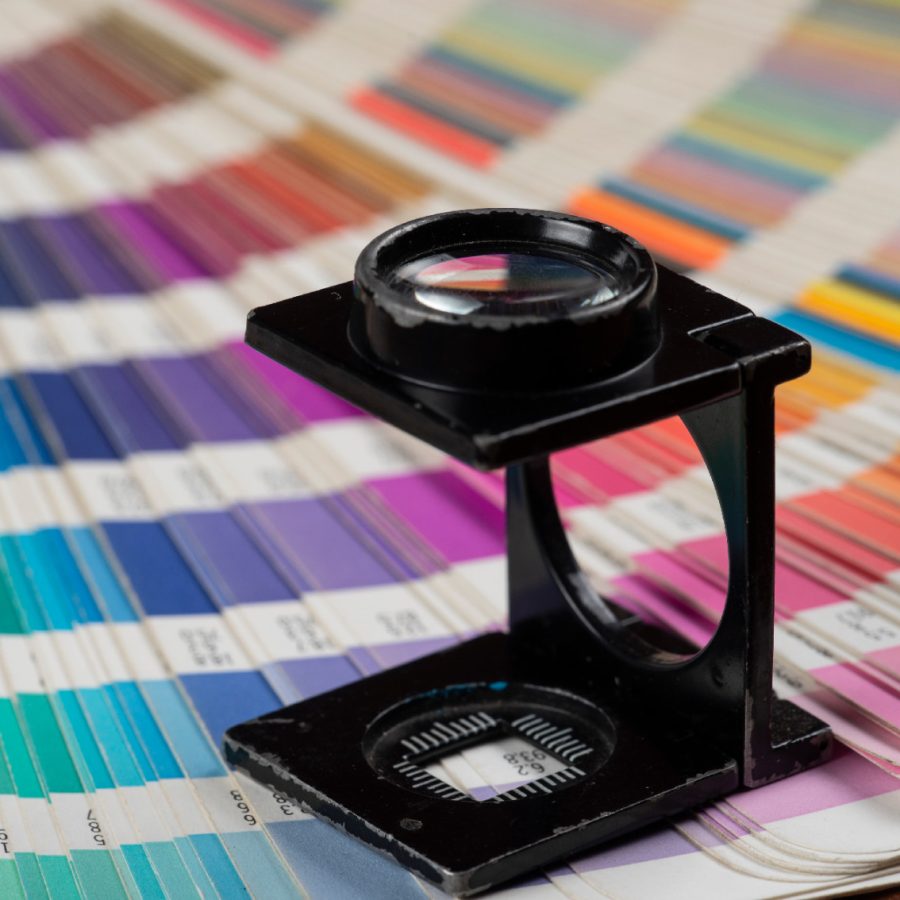
- Colors are separated physically (not digital print), so precise separation and work with Pantone or CMYK systems with real application values is necessary.
- Layout and assembly must be prepared with precise register—since the press is equipped with systems like TAPS and REGISTRON, requiring flawless technical files for automated inspection.
At our facility, every file for gravure printing undergoes thorough checking, optimization for deep engraving, and simulation of the final look on the target substrate—whether it’s PET, OPA, AL, laminate, or multilayer film.
Flexo printing — speed, flexibility, and high reproducibility
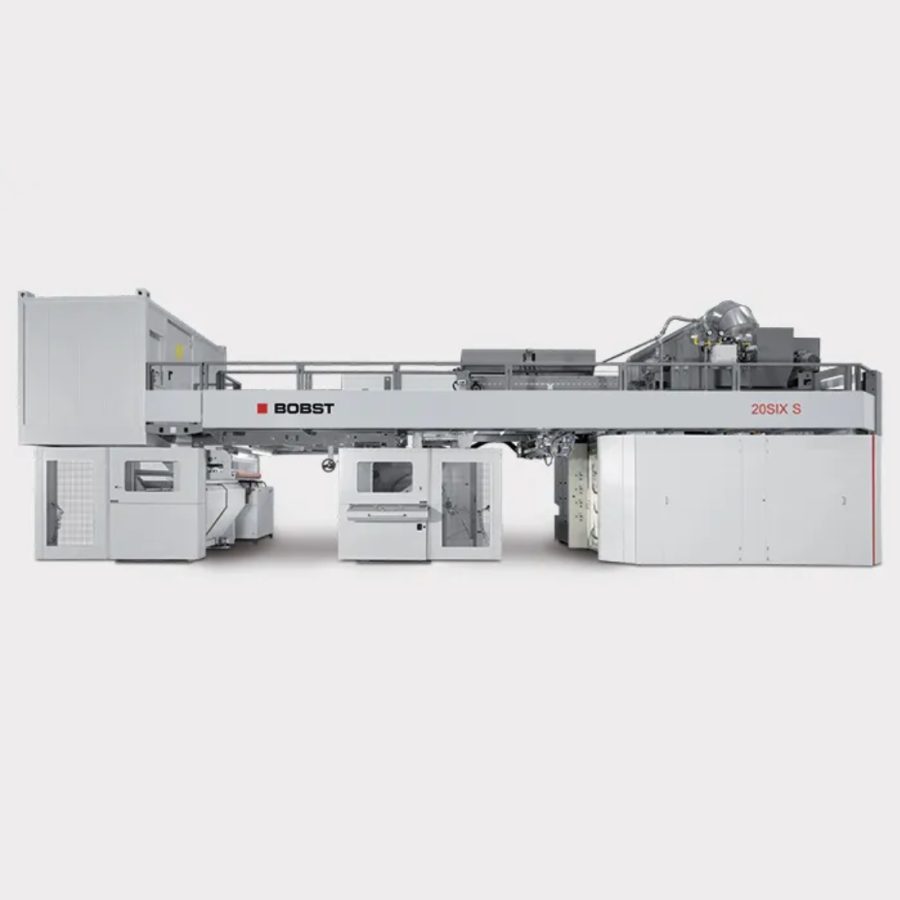
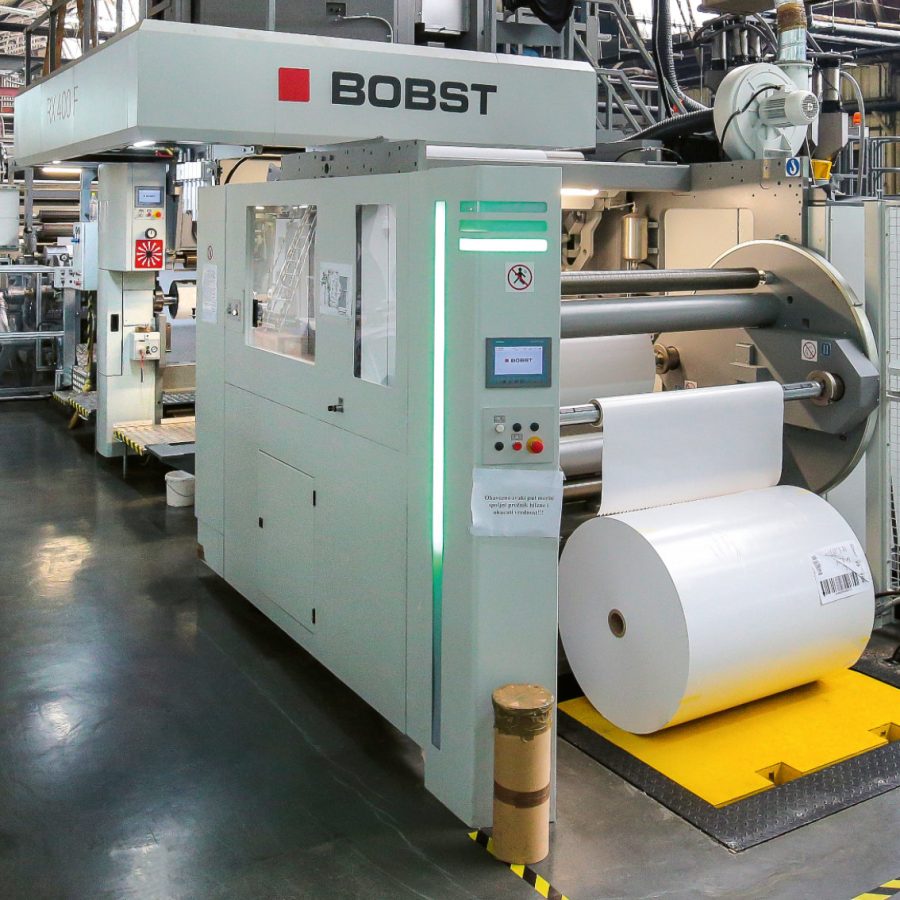
Flexo printing, carried out at Tipoplastika on the BOBST 20SIX press, enables fast processing of various flexible substrates, from monofilms to complex laminates. The key difference compared to gravure is the use of photopolymer plates, which require a different approach to graphic prepress.
Design and prepress specifics for flexo printing:
- Dot gain must be considered—fine lines and light gradients require special treatment to prevent “filling in” on the print.
- Reverse text and thin white letters must be adapted to the plate thickness and substrate type—since flexo printing pressure is transferred directly to an elastic surface.
- Use of flat colors and overprint varnishes must be carefully balanced for uniform ink coverage.
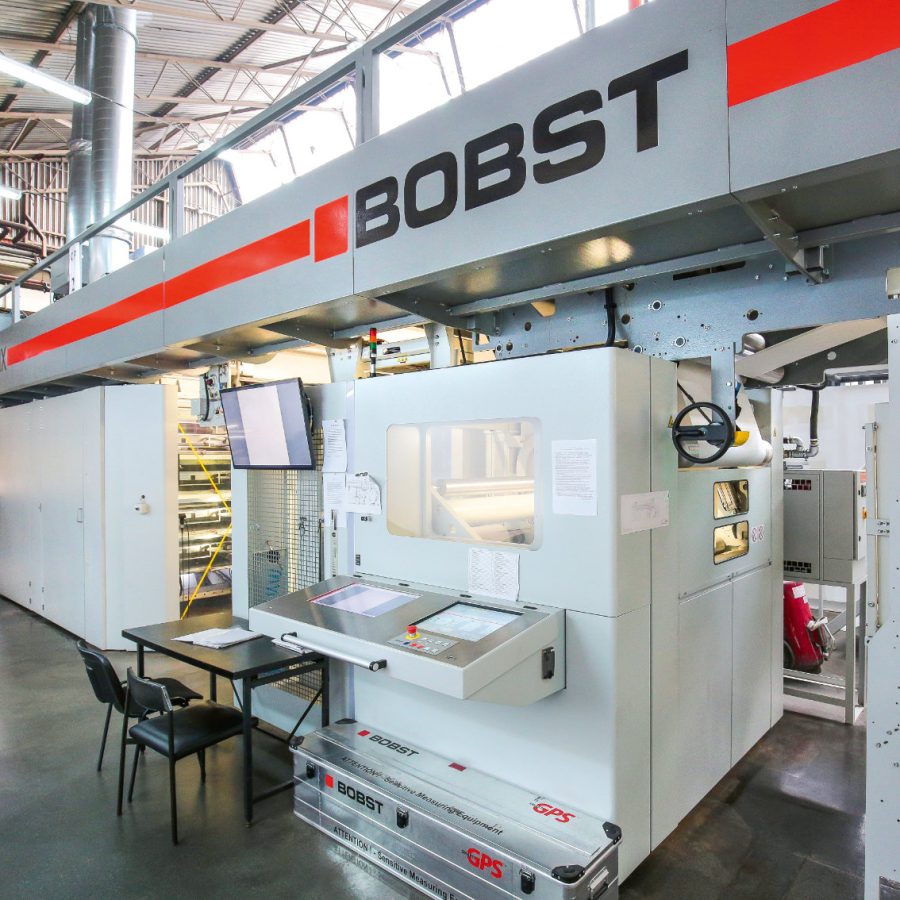
- Color registration is digitally controlled by the GPS system, allowing fine calibration—but only if files are technically flawless.
Our team uses software solutions such as Esko, Adobe Creative Suite, and working profiles specific to each substrate type and print run, ensuring every design is optimal for production and clear in shelf communication.
At Tipoplastika, design is not just a visual decision; it’s an engineering and technological process that ensures every creative idea is consistently and precisely transferred to packaging. Our job is to make your ideas work flawlessly in production, look great on the shelf, and save time and money in printing.
That’s why clients don’t just bring us files—they bring us their trust.
Our approach, tools, and standards – A reliable link between design and print
Technical file validation
Detailed checking of every file—format, raster, separations, colors, fonts, and dimensions.
Adaptation to printing technology
Files are optimized for gravure or flexo printing according to material and machine type.
Mockup and simulation
Before printing, we provide visual confirmation of the design on actual materials.
Standardized workflow
We operate according to international graphic standards (PDF/X, PMS), with no errors or rework.
Software and tools
Adobe and Esko platforms form the backbone of our workflow system and integration with printing.
Machine compatibility
Files are ready for BOBST RS6003C HS and 20SIX—no additional interventions needed in production.

Technical Design Processing That Guarantees Visual and Printing Success
At Tipoplastika, design is not just a visual decision—it is an engineering and technological process that ensures every creative idea is consistently and precisely transferred to packaging. Our task is to make your ideas work flawlessly in production, look great on the shelf, and save both time and money in printing.